How Animated Films Are Teaching Children About Environmental Stewardship
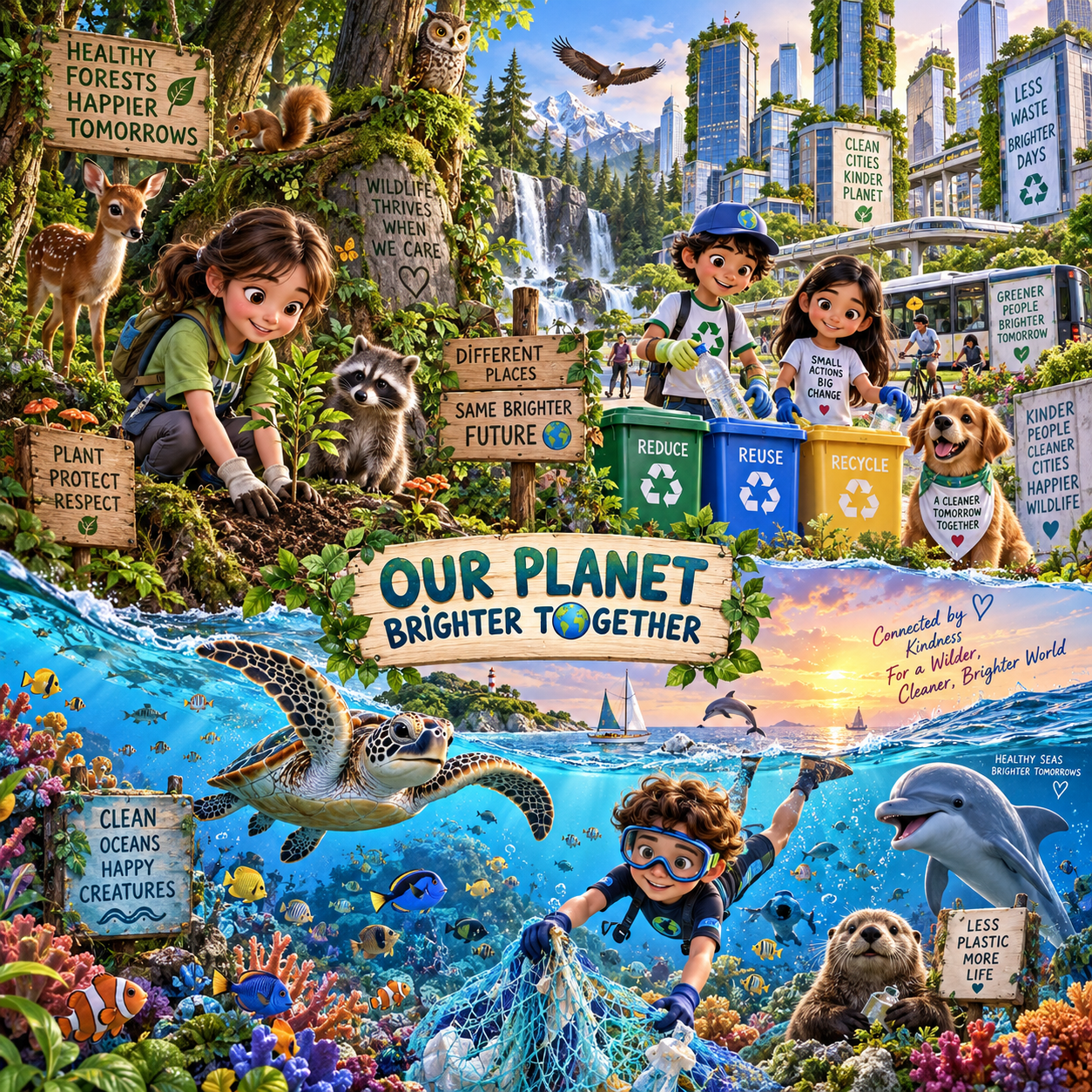
Animated films can turn environmental stewardship into a story children can see, feel, and discuss. Through memorable characters, imaginative worlds, and clear cause-and-effect relationships, animation introduces climate change, biodiversity, pollution, conservation, and sustainable living without requiring young viewers to master complex scientific language.
A film alone cannot guarantee a lasting change in knowledge or behavior. Its real value appears when families, teachers, and environmental film festivals use the story as a starting point for curiosity, empathy, and practical participation.
Why Animation Is a Powerful Environmental Education Tool
Animation is a powerful environmental education tool because it makes abstract ecological ideas visible, emotional, and easier to understand. Imaginative worlds give children a safe way to explore serious subjects while memorable images help connect environmental concepts to everyday experience.
A child may struggle to picture habitat loss or resource depletion as statistics. Animation can show a forest becoming fragmented, a river filling with waste, or an animal searching for food. These images provide a mental model: ecosystems are connected, and changes in one part can affect many others.
Animation also expands what filmmakers can show. A story can move beneath the soil, into a coral reef, across a melting landscape, or into the imagined future of a city. Visual transformation gives shape to processes that normally unfold over decades, including climate change and biodiversity decline.
The medium supports children’s environmental education in another important way: it creates emotional distance without removing emotional meaning. Viewers can feel concern for a fictional animal or community while remaining in a setting that feels approachable. That combination encourages questions rather than immediate defensiveness.
However, accessibility should not be confused with simplicity. A visually compelling film may introduce an issue, but children still need adults to explain uncertainty, local context, and the difference between an individual choice and a wider policy or community challenge.
Environmental Themes Children Encounter in Animated Films
Animated films commonly introduce children to habitat protection, climate change, wildlife conservation, pollution, waste reduction, resource use, and the relationship between humans and nature. These themes often overlap because environmental problems rarely occur in isolation.
Habitats, biodiversity, and wildlife conservation
Stories about forests, wetlands, oceans, or grasslands can show why animals need connected habitats, clean water, food sources, and safe places to reproduce. A threatened character may help children understand biodiversity as a living network rather than a list of rare species.
The strongest stories avoid presenting wildlife only as something attractive or magical. They show animals as part of functioning ecosystems and help viewers recognize that conservation protects relationships among plants, animals, soil, water, and people.
Climate change and changing environments
Climate change can be difficult to explain to young audiences because it involves global systems and gradual trends. Animation makes it more understandable by showing altered seasons, extreme weather, changing coastlines, or communities adapting to new conditions.
Age-appropriate storytelling matters. Younger children may benefit from focusing on caring for habitats and noticing seasonal changes, while older children can discuss greenhouse gases, adaptation, climate justice, and the difference between personal action and institutional responsibility. Reliable background information from the NASA Climate website can help adults answer follow-up questions accurately.
Pollution, waste, and resource use
Animated stories often make pollution visible through overflowing landfills, dirty waterways, smoky skies, or discarded objects that affect wildlife. These images can lead naturally to conversations about reuse, repair, recycling, food waste, clean transportation, and responsible consumption.
Resource use adds another layer. Children can explore where water, energy, food, and materials come from, and why using less can protect ecosystems. The goal is to build understanding, not to suggest that children alone are responsible for solving industrial or political problems.
Storytelling Techniques That Build Environmental Awareness
Environmental storytelling builds awareness by connecting ecological systems to characters, emotions, humor, symbolism, and visible consequences. When children care about what happens to a character, they become more willing to think about the world that character inhabits.
Relatable characters and emotional journeys
A curious child, determined animal, or imperfect community member gives the audience a point of entry. The character may begin with limited knowledge, make a mistake, notice harm, and gradually learn to cooperate. That journey tells children that environmental responsibility is a skill people develop rather than a test they must pass perfectly.
Empathy is especially valuable. Caring about a fictional creature can become a bridge to ecological responsibility when adults connect the story to local species, parks, rivers, or urban habitats.
Humor, symbolism, and visual language
Humor lowers the barrier to difficult conversations. A comic character who wastes resources or misunderstands nature can make a lesson memorable without shaming the audience. Symbolism works in a similar way: a shrinking forest, a blocked migration route, or a single seed can represent loss, resilience, and renewal.
Visual contrasts also communicate quickly. A thriving wetland beside a polluted one can show the consequences of human choices before a character explains them. These images remain useful discussion tools after the credits.
Cause and effect
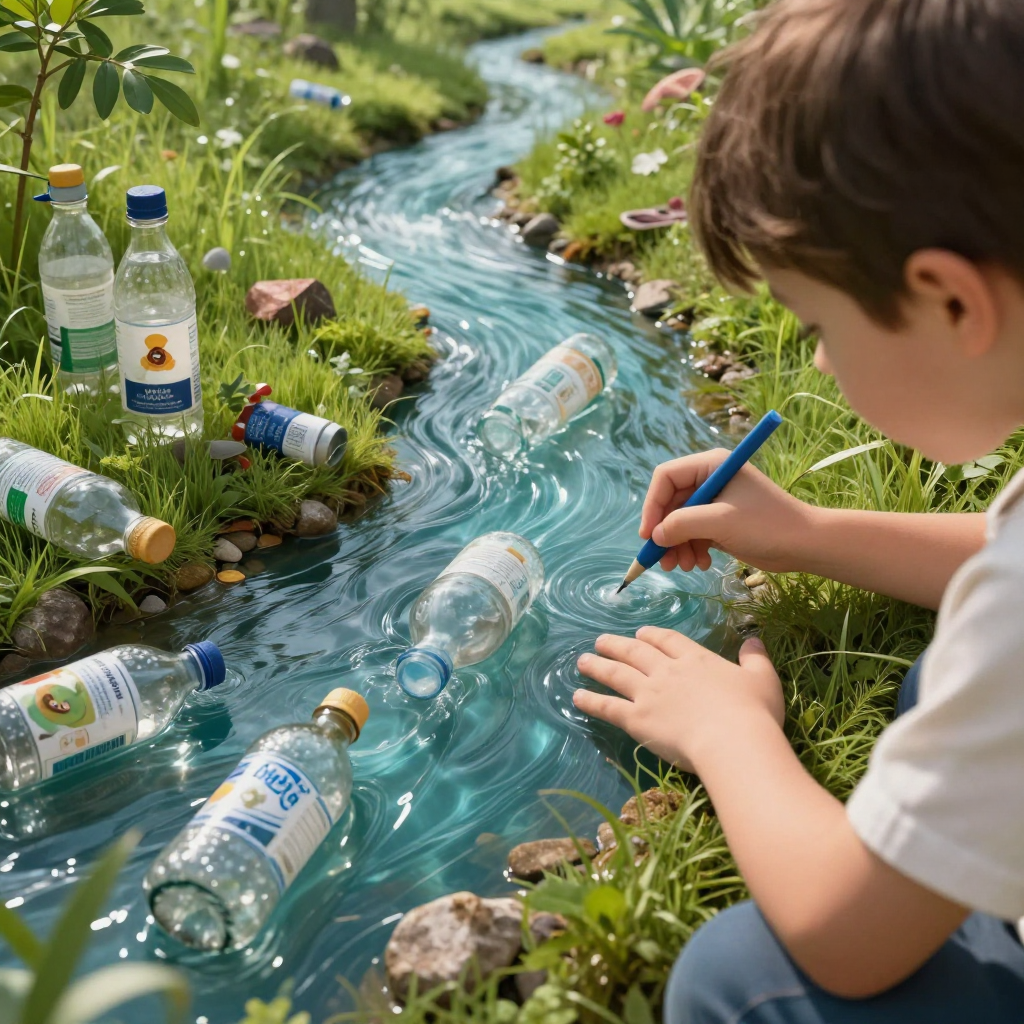
Children learn more when a story clearly connects actions with outcomes. Throwing waste into a stream may affect fish, plants, and people downstream. Restoring a habitat may attract pollinators and improve water quality. Good storytelling preserves complexity while making key relationships visible.
From Screen Empathy to Everyday Stewardship
Films encourage everyday stewardship when viewers translate emotional responses into small, shared, and measurable actions. A discussion, outdoor observation, or household experiment can turn a memorable scene into practical learning.
Useful follow-up activities include:
- Reduce waste: Conduct a one-day waste audit, then choose one realistic change, such as using refillable bottles or planning meals to reduce food waste.
- Protect local wildlife: Plant native flowers where appropriate, keep outdoor spaces free of litter, provide safe water, or observe birds without disturbing nests.
- Save resources: Track household water or electricity use for a week and identify one reduction that the whole family can support.
- Spend time outdoors: Visit a park, shoreline, community garden, or schoolyard and record evidence of interdependence, such as pollinators, decomposers, or signs of seasonal change.
- Ask who is affected: Discuss how environmental changes can affect communities differently, introducing fairness and environmental justice in age-appropriate language.
The best activity is specific enough to complete. Instead of asking a child to save the planet, invite the family to remove litter from a 20-meter stretch of path or compare reusable and disposable items over seven days. Concrete actions create feedback, and feedback helps stewardship become a habit.
The Role of Parents, Teachers, and Environmental Film Festivals
Parents, teachers, and environmental film festivals deepen learning by turning passive viewing into guided conversation, creative work, and community participation. Their role is to connect the film’s emotional world with reliable information and local possibilities.
Questions for families and classrooms
After viewing, adults can ask:
- What changed in the environment, and who was affected?
- Which character made a responsible choice? What made that choice difficult?
- What parts of the story resemble our community?
- Which solution worked, and what limits or trade-offs did it involve?
- What is one action we can take together this week?
Teachers can extend the film through a habitat map, a waste audit, a local species profile, or a short student-made animation showing one environmental cause and effect. Comparing the film’s fictional solution with evidence from local science helps students distinguish symbolism from literal explanation.
What festivals can add
Environmental film festivals offer a shared setting where children encounter different cultures, landscapes, artistic styles, and environmental perspectives. A thoughtful program can pair animation with a moderated filmmaker conversation, a hands-on workshop, a local conservation group, or a family activity sheet.
Festival organizers should provide content notes and age guidance, allow time for questions, and avoid treating a screening as a complete lesson. The strongest programs create a bridge from cinema to community rather than turning the event into a guilt-driven campaign.
Using Animated Films Thoughtfully
Animated films should be used as conversation starters and learning tools, with age-appropriate guidance, balanced context, and opportunities for action. Their emotional power is valuable, but it can also oversimplify complicated environmental decisions.
Adults should watch for four common mistakes:
- Relying on fear: Frightening images may capture attention, but repeated doom messaging can produce anxiety or helplessness. Balance concern with agency, support, and realistic hope.
- Expecting one film to teach everything: A story may focus on wildlife or waste while leaving out economics, governance, science, or community perspectives. Add trustworthy resources and local examples.
- Assigning children adult responsibility: Children can practice stewardship, but corporations, governments, and institutions shape many environmental conditions. Explain shared responsibility clearly.
- Skipping cultural and scientific context: A fictional solution may not apply everywhere. Discuss whose voices appear in the story, whose are missing, and how local knowledge contributes to conservation.
Parents and educators can also check whether a film’s message matches its audience’s developmental stage. Young children may benefit from stories about care, cooperation, and observation. Older children can examine trade-offs, unintended consequences, climate change evidence, and the role of public decision-making.
Used carefully, animation does something important: it gives environmental stewardship a human scale. A child may leave the screen remembering a character, an image, or a difficult choice. With patient guidance, that memory can become a question, then a conversation, and eventually a shared act of care.
Frequently Asked Questions
How can animated films teach children about climate change?
Animated films teach climate change through visible changes in weather, habitats, seasons, and community life. Adults can add accurate context, explain that climate change is a long-term global process, and discuss both individual and collective responses.
What environmental lessons are most suitable for young children?
Young children respond well to lessons about caring for animals, keeping water and land clean, reducing waste, sharing resources, and noticing nature. These ideas build empathy and ecological responsibility without overwhelming them with technical detail.
How can parents discuss environmental themes after a film?
Parents can ask what the child noticed, how characters felt, what caused the environmental problem, and whether anything similar happens locally. Finish with one small action the family can complete together.
Can environmental film festivals support children’s ecological learning?
Yes. Environmental film festivals can combine animated screenings with age guidance, educator-led discussions, filmmaker conversations, outdoor activities, and local conservation partnerships. This format connects storytelling with evidence, community, and practical participation.