Interview with a Director: Using Storytelling to Fight Climate Change
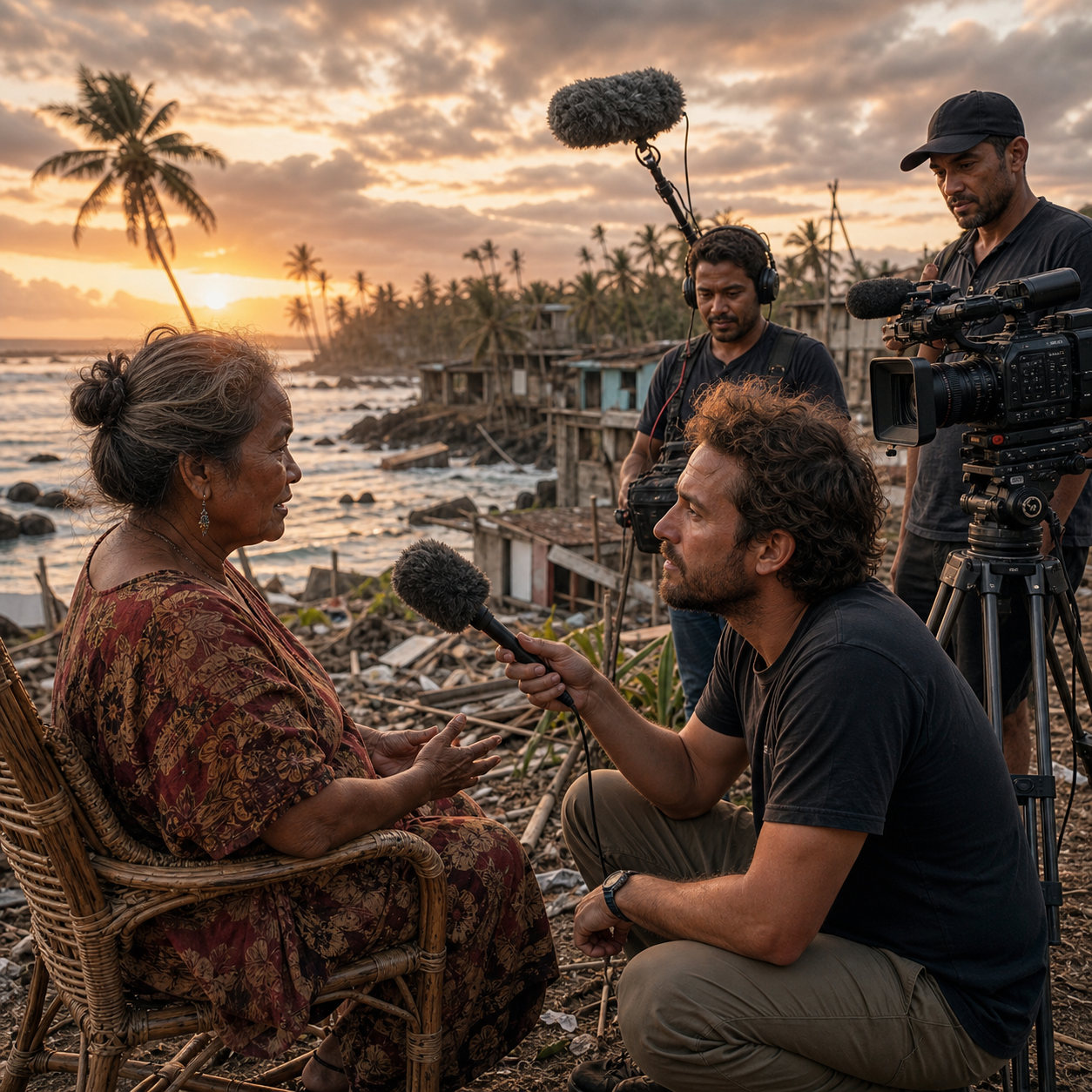
Climate change can feel too large to hold in a single image. It involves atmospheric science, economic systems, public policy, ecosystems, and decisions made across generations. Yet audiences rarely connect with an abstract explanation alone. They connect with a face, a place, a memory, or a difficult choice.
In this interview-style feature, a film director reflects on using storytelling and documentary film to communicate environmental change. The director’s perspective shows how environmental filmmaking can combine evidence with empathy while giving viewers a meaningful place in the conversation.
Why Storytelling Matters in the Climate Conversation
Storytelling makes climate change easier to understand by connecting scientific facts with people, places, and decisions that audiences can recognize. A personal narrative can give scale to a global issue without pretending that one experience represents everyone.
Q: Why begin with a human story instead of a scientific overview?
Director: Science tells us what is changing and why it matters. Storytelling helps audiences feel the meaning of that change. If we meet a fisher adjusting to unfamiliar seasons, a farmer protecting a water supply, or a young person imagining a different future, climate change becomes part of lived experience rather than a distant headline.
Character-driven storytelling also creates a natural path through complexity. A film may follow one community, but it can introduce wider themes such as adaptation, resilience, energy, food systems, biodiversity, and sustainability. The personal story acts as a doorway. It does not replace climate science; it gives the science somewhere to land.
Visual storytelling has a particular strength. A repeated shot of a shoreline, a dry reservoir, or a forest recovering after fire can show gradual change more clearly than a single statistic. The director must still provide context, explain uncertainty, and avoid implying that every visible event has one simple cause. Good climate communication respects both emotional truth and factual precision.
The Director’s Motivation and Creative Approach
A director’s motivation shapes the film’s point of view, while creative choices determine how audiences encounter climate change. The strongest environmental films begin with curiosity and responsibility rather than a desire to deliver a lecture.
Q: What made you want to address climate change through film?
Director: I was interested in the distance between knowing and acting. Many people understand that climate change is serious, yet the issue can remain emotionally remote. I wanted to explore what happens when environmental change is encountered through daily routines: work, family, food, travel, and decisions about home.
The concept developed through listening. Instead of starting with a conclusion, the director might spend time with residents, researchers, organizers, and local workers. Those conversations reveal the film’s central question. Is the story about loss, adaptation, responsibility, memory, or the struggle to imagine a fair transition?
Creative decisions follow that question. A quiet observational style may allow viewers to notice small changes in a landscape. Archival footage can connect present conditions with collective memory. Animation or maps can clarify processes that cameras cannot directly capture. Music can deepen atmosphere, but it should not manufacture emotion where testimony and images already carry weight.
This approach gives the film a defined perspective without turning it into propaganda. The director has a point of view, but the audience can still encounter uncertainty, disagreement, and complexity.
Turning Climate Science into a Human Story
Environmental storytelling translates climate science into human terms by showing how environmental changes affect communities, livelihoods, landscapes, and everyday choices. It works best when the film links personal experience to reliable evidence and clearly explains the connection.
Q: How do you make a complex climate topic accessible without oversimplifying it?
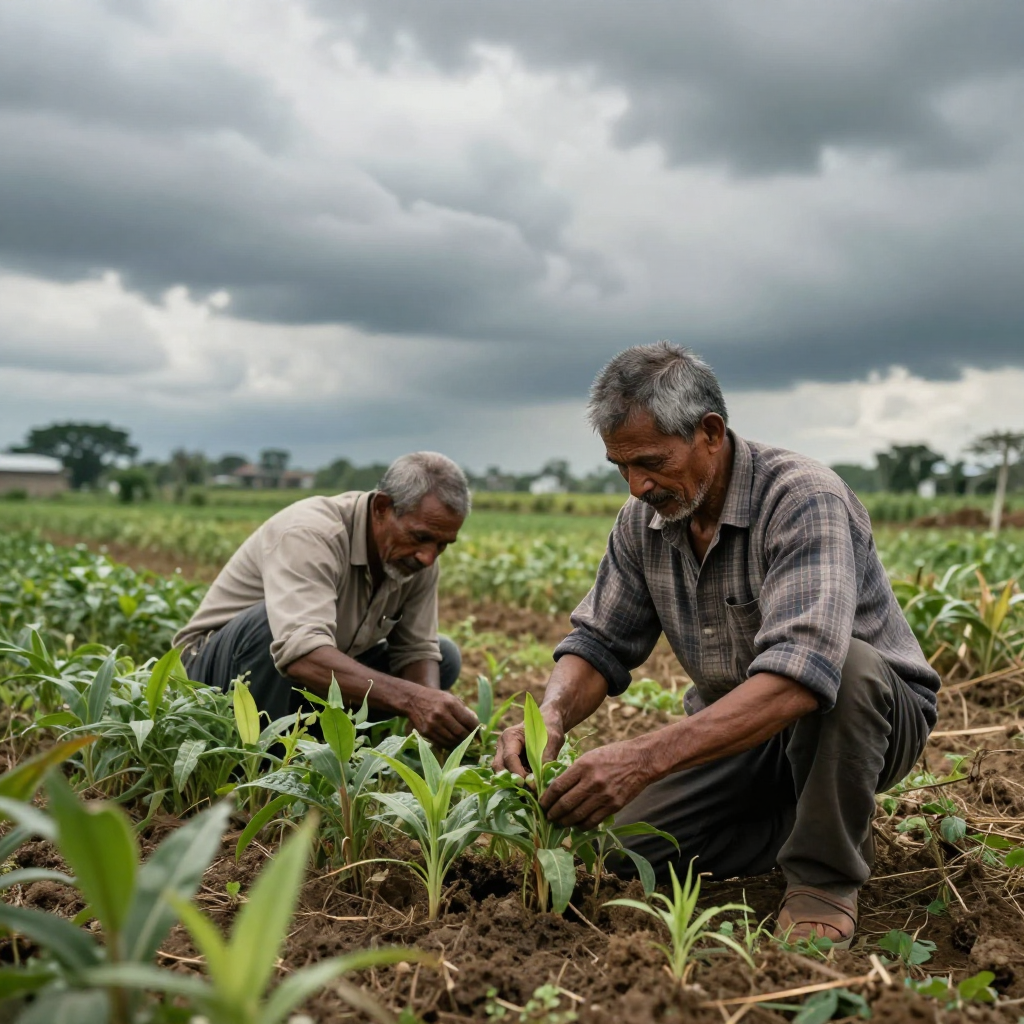
Director: We look for the point where a scientific process meets a practical consequence. Rising temperatures may be discussed through changing work conditions. Altered rainfall may appear through a conversation about crops, household water, or migration. The science remains present, but viewers see why it matters to someone.
That connection requires careful collaboration. Filmmakers can consult climate scientists, local experts, public agencies, and community organizations during research and editing. Authoritative resources such as the NASA climate change overview can help production teams check terminology and distinguish established findings from interpretation.
A responsible film also avoids presenting affected communities as passive victims. People may face real losses while possessing deep knowledge, creativity, and agency. The camera can show difficult conditions and practical responses in the same narrative: a cooperative restoring wetlands, a neighborhood improving cooling spaces, or workers debating the costs of a transition.
One useful editorial test is simple: can viewers identify the environmental change, understand its human consequence, and see why the issue involves more than one individual choice? If any link is missing, the film may need more context or a clearer sequence.
Balancing Emotion, Evidence, and Responsibility
An effective climate documentary balances emotion with evidence by making accurate claims, representing people ethically, and leaving room for agency. Urgency matters, but fear alone can produce exhaustion or withdrawal.
Q: How do you decide how much emotion belongs in the film?
Director: Emotion is already present in the subject. Our responsibility is to create space for it without exploiting anyone’s pain. We ask whether a scene gives a participant control over their story and whether the audience receives enough context to understand what they are seeing.
That responsibility begins during production. Participants should understand how filming may affect them, where the documentary may be shown, and whether sensitive material can be withdrawn or clarified before release. Ethical representation also means avoiding selective editing that makes a person appear uninformed, contradictory, or responsible for conditions outside their control.
Accuracy requires more than adding an expert interview at the end. Dates, locations, captions, statistics, archival images, and causal language all need checking. If evidence is uncertain, the film should say so. A dramatic image can be emotionally powerful while still being misleading if the narration assigns it an unsupported cause.
The director’s central framework is feeling, proof, and possibility: feeling helps audiences care, proof helps them trust the film, and possibility helps them imagine a response. Removing any one element weakens climate communication. A film built only on proof may feel remote; one built only on feeling may misinform; one offering only optimism may sound evasive.
The Challenges of Making Environmental Films
Environmental filmmaking is difficult because climate change unfolds over long periods, access can be sensitive, and the most important processes are often invisible or slow. Directors must solve logistical, ethical, and narrative problems at the same time.
Q: What obstacles have shaped the filmmaking process?
Director: Time is one of the biggest challenges. A river, forest, or community may change over years, while a production schedule is measured in months. We use repeat locations, diaries, archival material, and long-term relationships to show what a short visit cannot capture.
Access can be equally complicated. Communities affected by environmental disruption may have experienced researchers, journalists, or officials arriving briefly and leaving without accountability. Trust grows through transparency, listening, and returning material for factual review. That takes time, but rushing access often produces thinner stories.
There are also practical constraints. Weather can stop a shoot, remote locations can increase costs, and filming in fragile habitats requires strict environmental precautions. Crews may need to limit travel, reduce equipment, avoid disturbing wildlife, and plan energy and waste use carefully. Sustainability in production is part of the project’s credibility, even though no film set has a zero-impact footprint.
Three common mistakes deserve attention:
- Using catastrophe as the entire story: This can attract attention but leave audiences numb. Include context, relationships, and credible forms of agency.
- Letting visuals outrun evidence: A striking image may not prove a specific climate cause. Label locations and time periods, and verify narration.
- Speaking for communities: When filmmakers interpret every experience, participants lose authority. Let people explain their own knowledge and priorities.
From Watching to Taking Part
Films can encourage climate action by creating informed discussion, linking viewers with local opportunities, and turning private concern into community engagement. Watching a documentary is a beginning, not a complete solution.
Q: What should happen after the credits?
Director: The audience should have room to talk. A screening can be followed by a Q&A with the director, scientists, community representatives, educators, or local organizers. The goal is not to prescribe one response for everyone. It is to help people understand which actions are relevant, realistic, and collective.
This is where an environmental film festival can make a distinctive contribution. Festivals create discovery through films audiences might not otherwise find, then add dialogue through introductions, panels, workshops, and informal conversations. A carefully designed event may connect a documentary’s theme with a local watershed group, repair network, conservation project, or climate education program.
Audience engagement improves when invitations are specific. Instead of ending with a vague appeal to care more, a screening guide might ask viewers to:
- Discuss which climate impacts are visible in their own region.
- Identify a local organization or public meeting related to the film’s subject.
- Separate individual choices from changes that require institutions and communities.
- Share one question they still have and find a reliable source for the answer.
Films cannot solve climate change on their own. They can, however, help people listen across experience, recognize shared stakes, and find a first practical step.
What the Director Hopes Audiences Take Away
The director hopes audiences leave with a clearer understanding of climate change, greater empathy for affected communities, and a sense that meaningful participation remains possible. Hope here is grounded in action and honest about the scale of the crisis.
Q: If viewers remember one message, what should it be?
Director: Pay attention to the stories already unfolding around you. Climate change is global, but responsibility is experienced locally. Learn from people closest to the changes, question simple explanations, and join others where your effort can have continuity.
That message reflects the broader value of cinema in climate communication. A documentary can hold evidence and emotion in the same frame. It can make room for grief without making despair the final word, and it can show solutions without pretending that adaptation is equally available to everyone.
For environmental film festivals, this balance is central. The strongest programs do more than display compelling images. They create spaces for discovery, dialogue, empathy, and collective engagement. When a film sends viewers back into their communities with better questions and stronger connections, storytelling has begun to do its work.
Frequently Asked Questions
How can storytelling make climate change easier to understand?
Storytelling connects climate science with recognizable people, places, and decisions. Personal narratives give audiences context and emotional meaning while evidence explains the wider environmental process.
What makes an effective environmental documentary?
An effective environmental documentary combines a clear human perspective, verified information, ethical representation, strong visual choices, and a realistic sense of agency. It acknowledges uncertainty and avoids reducing complex issues to individual blame.
How do environmental film festivals support climate conversations?
Environmental film festivals support climate conversations by pairing screenings with Q&As, panels, workshops, educators, scientists, and community organizations. They turn a viewing experience into an opportunity for learning and local engagement.
Can films inspire meaningful climate action?
Films can inspire reflection, discussion, and participation, but viewing alone does not solve climate change. Their influence grows when audiences receive reliable information, specific next steps, and opportunities to act with others.