Panel Discussion Recap: The Future of Environmental Storytelling in Film
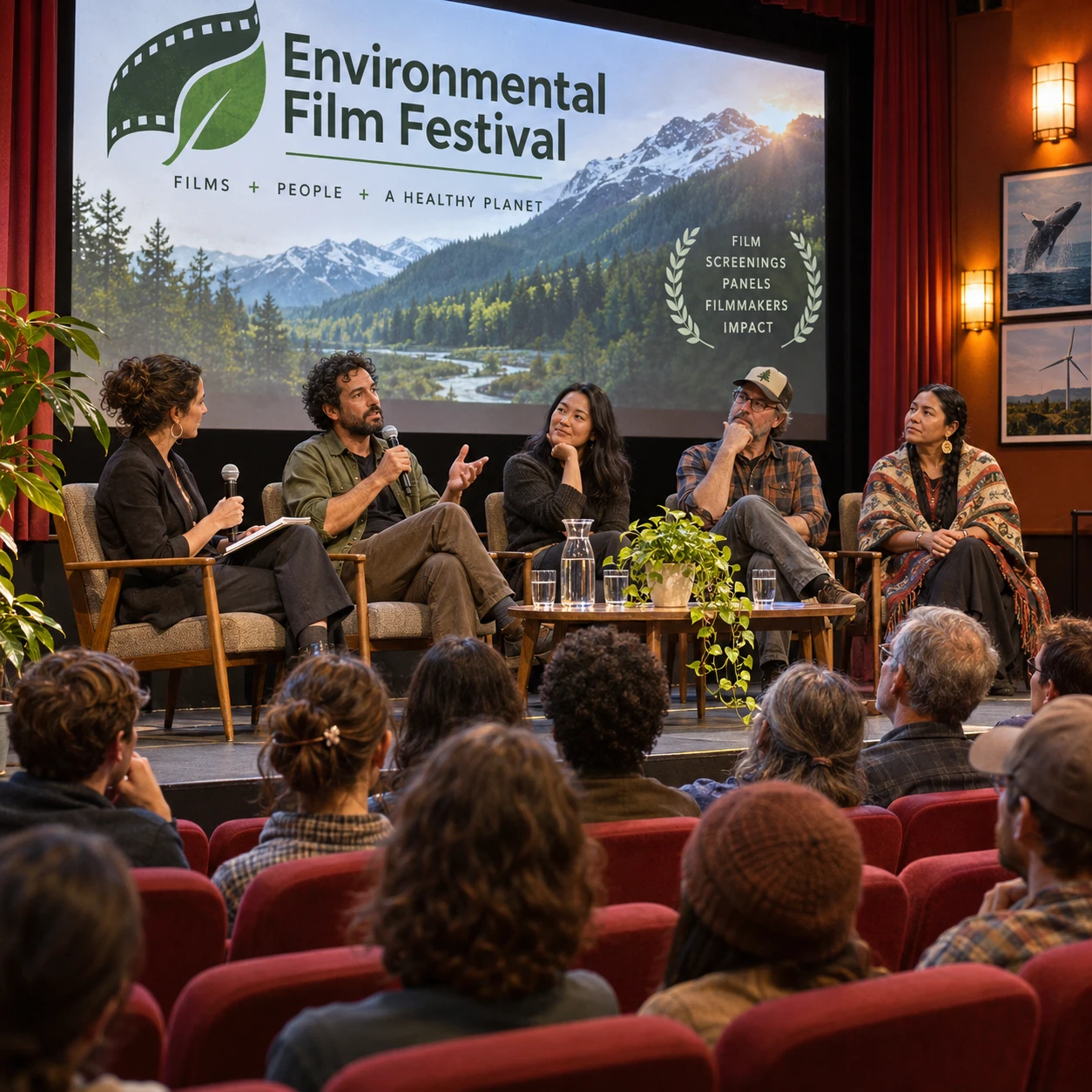
Environmental stories reach viewers through more than facts on a screen. They can make climate change tangible by connecting it to places, livelihoods, relationships, and decisions people recognize. In a panel discussion about the future of environmental storytelling in film, the conversation centered on the craft and responsibility involved in bringing these stories to audiences.
This recap focuses on the discussion’s broad themes rather than attributing specific remarks or conclusions to individual panelists. Its central question is familiar to environmental filmmakers: how can a film communicate urgency while staying attentive to complexity, perspective, and the people most affected?
Why environmental stories matter on screen
Environmental stories matter on screen because film can connect large-scale issues with lived experience. Documentary filmmaking and narrative film give audiences ways to encounter environmental change through people, places, and choices, rather than through statistics alone.
That connection is especially useful when a subject feels distant or abstract. Climate change may be discussed in global terms, but its consequences are experienced locally: in changing landscapes, disrupted work, health concerns, and decisions about where and how to live. A well-observed film can bring those realities into focus without suggesting that one story represents every community or every cause.
The panel’s focus on storytelling also points to a distinction between information and experience. Facts establish what is happening; images, sound, pacing, and point of view shape how viewers understand it. An environmental film can invite attention and empathy, but its effect depends on choices made throughout production, from whose experiences are filmed to what context remains in the final edit.
Film is not a substitute for scientific explanation, public policy, or community action. Its particular strength is helping people stay with a subject long enough to consider its human and ecological dimensions. That makes environmental storytelling valuable when it is grounded, specific, and honest about what a film can show.
Key ideas from the panel
The panel’s key ideas concerned how environmental stories are shaped: through research, point of view, narrative form, and attention to the people and places on screen. The discussion emphasized craft and responsibility rather than treating environmental film as a single genre with one correct approach.
Documentary filmmaking and narrative film can approach environmental issues differently. A documentary may draw on testimony, observation, archival material, or scientific context. A narrative film can use character and dramatic structure to explore how environmental pressures affect relationships and choices. Neither form guarantees nuance. In both, filmmakers must decide what to include, what to leave out, and how to make the material intelligible without flattening it.
Several practical questions follow from that emphasis:
- What is the story’s scale? A film may focus on one household, a region, or a wider system. The chosen scale affects what viewers can see and what context they need.
- Whose knowledge carries weight? Scientific expertise, local experience, and lived memory can inform one another, but they should not be treated as interchangeable.
- What does the form make possible? A close, character-led account may build intimacy; a broader structure may reveal patterns. Each approach comes with limits.
These are not claims that every panelist endorsed a particular method. They are the questions raised by the discussion’s attention to the work behind an environmental narrative. That distinction matters in a recap: the event’s confirmed themes can guide readers without assigning invented quotations or positions to its speakers.
Balancing urgency, nuance, and hope
Filmmakers can balance urgency, nuance, and hope by naming real stakes while showing the context, uncertainty, and agency within a story. Environmental storytelling loses credibility when it turns a complicated issue into a simple morality play or promises a reassuring ending the evidence cannot support.
Urgency comes from clarity about consequences. Nuance comes from showing how those consequences arise, who experiences them, and what constraints shape possible responses. A film about climate change, for example, can communicate the seriousness of the issue while distinguishing between causes, impacts, and unequal capacity to adapt. Precision does not weaken the message; it gives viewers a more trustworthy basis for understanding it.
Hope also benefits from precision. It need not mean that a problem is solved or that every story ends well. It can appear in acts of care, persistence, collaboration, or learning, while the film remains honest about what is unresolved. This approach avoids two familiar traps: despair that leaves viewers with no way to interpret what they have seen, and optimism that smooths over loss or conflict.
For filmmakers, a useful test is to ask whether the emotional arc is earned by the material. Does the ending reflect what participants actually face? Does the film distinguish an individual response from a systemic solution? Emotional impact and factual care can reinforce each other, but only when the story resists simplifying its subject for convenience.
Who gets to tell environmental stories?
Environmental storytelling depends in part on who is telling the story, who appears in it, and whose perspective shapes the edit. Attention to representation and environmental justice helps filmmakers avoid presenting affected communities as background, symbols, or passive recipients of outside attention.
Environmental change does not affect every community in the same way, and the ability to respond is uneven. A film that explores environmental justice should consider how exposure, resources, decision-making power, and historical context shape the experience being shown. That calls for more than adding a range of faces to the frame. It means asking who defines the problem, who provides knowledge, and who has a say in how the story is made and circulated.
These choices have practical consequences. Filmmakers can discuss consent and expectations early, explain how footage may be used, and consider whether participants can review sensitive details for accuracy or safety. They should also be clear about the limits of that process: editorial control and a participant’s right to assess their own risk are not the same thing.
The panel’s attention to perspective is a reminder that environmental stories carry ethical responsibilities as well as artistic ones. A compelling film can still misrepresent people if it strips their experiences of context. Careful collaboration can improve the story, though it takes time and does not remove every imbalance between a production and the people it films.
The audience’s role after the screening
After a screening, audiences can reflect, talk with others, and seek reliable context about the issues raised. A film may open a conversation or prompt further attention, but it cannot guarantee a particular response or solve an environmental problem on its own.
That modest view of audience engagement is useful. Viewers bring different experiences to a screening, and the same scene may raise different questions for people with different connections to the subject. A discussion with filmmakers, community members, or relevant local organizations can add perspective, provided it does not turn participants into spokespeople for everyone affected.
Audiences can carry the conversation beyond the cinema in practical ways:
- Note which claims the film supports directly and which questions call for more research.
- Look for context from credible scientific, community, or public sources before sharing a claim.
- Ask whose perspective is missing and how the film’s choices shaped the account.
- Discuss possible next steps with people who understand the issue locally, rather than assuming one action fits every place.
For film festivals, the screening is one part of the experience. A thoughtfully facilitated Q&A or conversation can help audiences engage with the film’s choices and limits. The goal is not to dictate what viewers should think; it is to create room for informed questions and exchange.
What the future may hold
The future of environmental storytelling will depend on filmmakers’ ability to tell specific, responsible stories and on festivals’ willingness to make space for meaningful exchange. The panel’s themes point toward a practice that values craft, context, and perspective alongside the urgency of environmental issues.
For filmmakers, that means matching form to subject, checking what a story leaves out, and treating participants as people with agency rather than as evidence for a thesis. For festivals, it means building settings where audiences can encounter varied environmental films and discuss them with care. For viewers, it means staying curious after the credits and recognizing that a film is an invitation to think, not a complete account of a complex issue.
There is no single style that defines a strong environmental film. A quiet narrative feature, a community-centered documentary, and a formally ambitious work can each contribute, if their choices serve the story and respect its subjects. The durable takeaway from the discussion is a useful standard: make the stakes clear, keep the complexity visible, and let the people in the story remain more than symbols.
Frequently asked questions
What is environmental storytelling in film?
Environmental storytelling in film explores relationships between people, place, and the natural world. It can address subjects such as climate change, conservation, pollution, land use, or environmental justice through documentary filmmaking or narrative film.
How can films address climate change without oversimplifying it?
Films can explain the specific issue they are following, distinguish personal experience from broader evidence, and show relevant context. They can communicate urgency without implying that one character or community represents everyone affected.
What role can environmental film festivals play?
Environmental film festivals bring films, filmmakers, and audiences together. Screenings and well-facilitated discussions can support audience engagement and help viewers ask questions about a film’s subject, perspective, and limits.
How can audiences continue the conversation after a screening?
Audiences can discuss what the film made visible, seek trustworthy context, and learn from people connected to the issue. Any next step should fit the local circumstances rather than assume that a single response works everywhere.